Home / News / Industry News
 Hot News
2026-08-12
2026-06-25
2026-04-09
2026-04-03
2026-03-24
2026-03-20
Terrazzo originated in 15th-century Italy, where Venetian craftsmen used leftover marble chips mixed with cement to create durable flooring. Today, modern manufacturing techniques have elevated terrazzo into a premium architectural material.
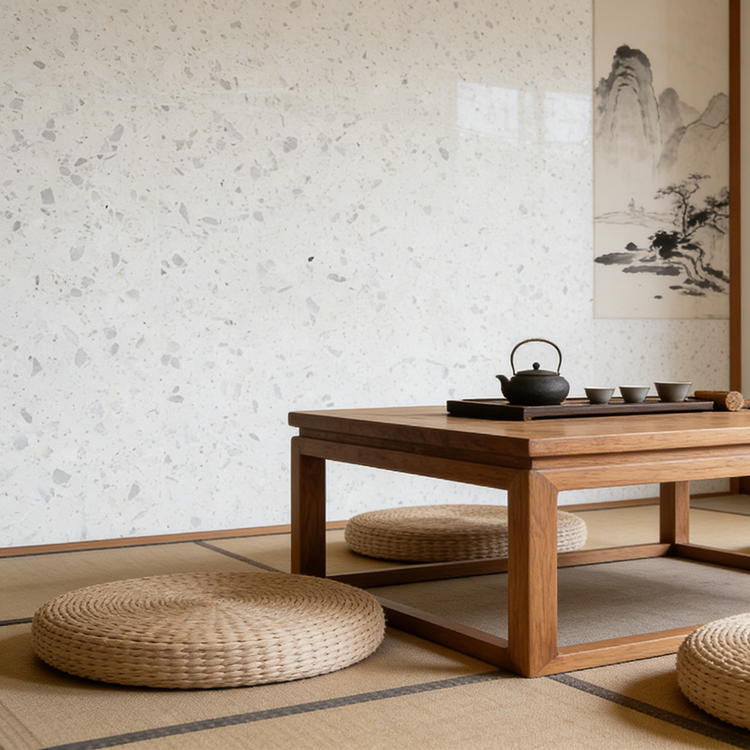
What makes terrazzo especially attractive for contemporary interiors is its unique visual texture. The combination of stone chips and binders creates a surface that feels both natural and artistic. Designers can choose from:
Marble chips
Quartz fragments
Glass aggregates
Recycled materials
This flexibility allows terrazzo to complement minimalist, industrial, Scandinavian, and luxury interior styles.
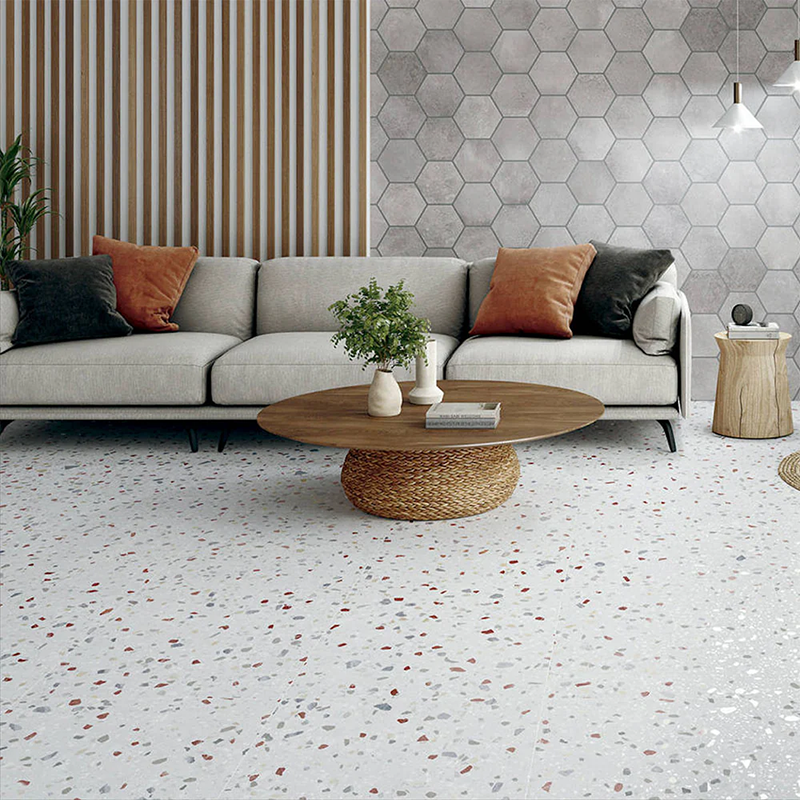
One major reason for terrazzo’s resurgence is its long-term durability. Compared with many flooring materials, terrazzo can last 50–100 years or more when properly installed.
Because of its strength and resistance to wear, terrazzo is widely used in:
Airports
Hotels
Shopping malls
Museums
Universities
Unlike traditional tiles, terrazzo surfaces are often poured or fabricated as large seamless panels, reducing grout lines and making them easier to maintain.
For designers and developers, this means lower lifecycle costs and long-lasting performance.
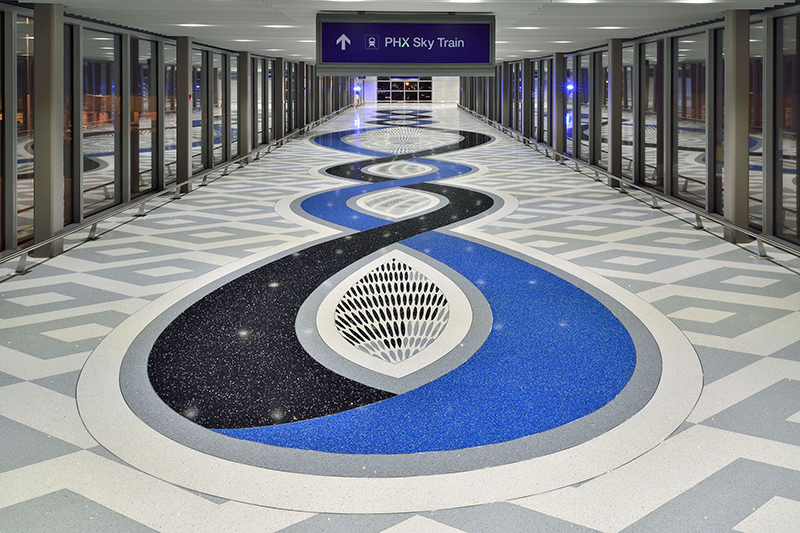
Sustainability is another major factor behind terrazzo’s popularity in modern architecture.
Many terrazzo products today incorporate recycled materials, including:
Recycled glass
Reclaimed marble chips
Industrial stone waste
Additionally, terrazzo’s long lifespan reduces the need for frequent replacement, which helps minimize environmental impact.
These characteristics make terrazzo an excellent option for LEED-certified projects and green building design.
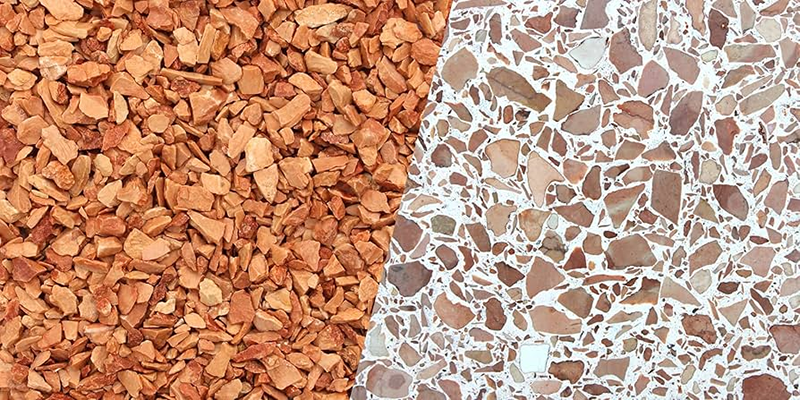
Another reason designers love terrazzo is its high level of customization. Unlike many natural stones with fixed patterns, terrazzo allows architects to control:
Chip size and color
Aggregate material
Base color
Pattern layout
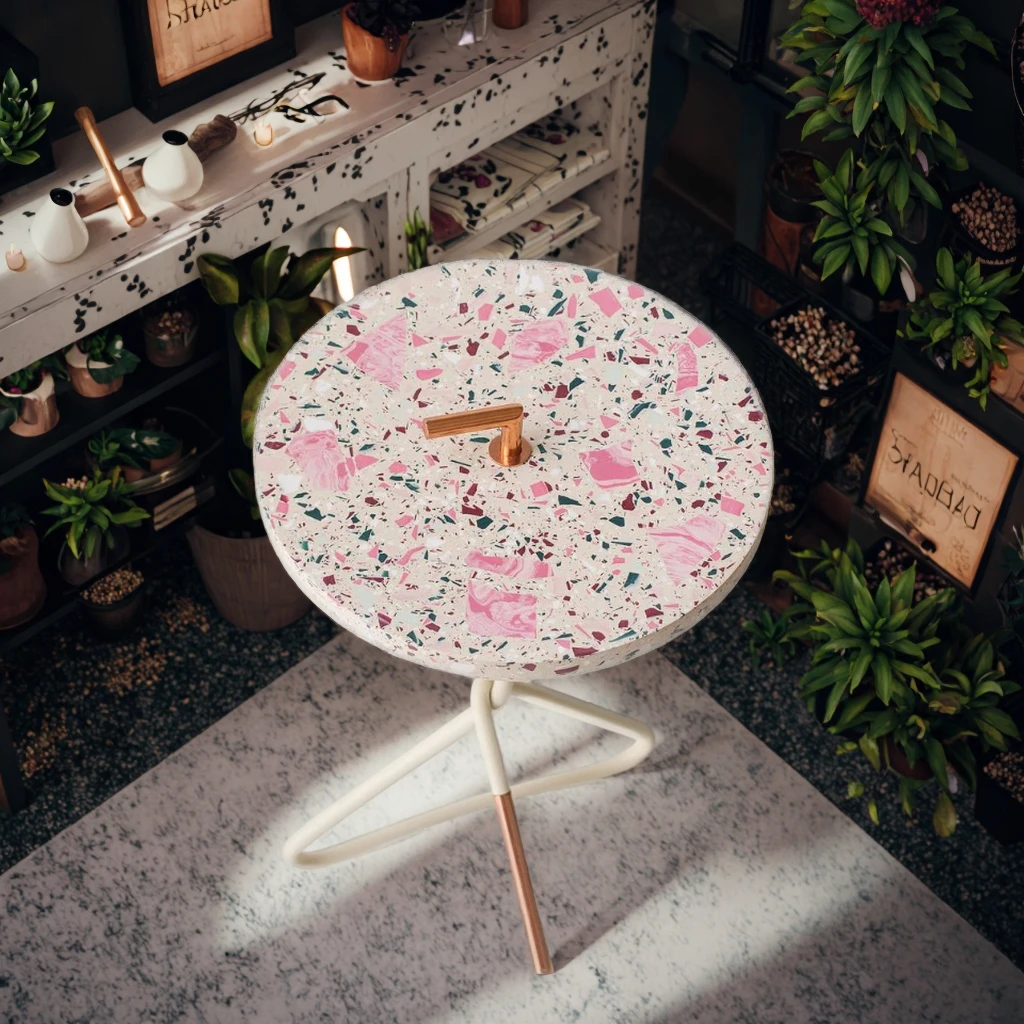
This means terrazzo can be tailored for flooring, countertops, walls, staircases, furniture, and decorative panels.
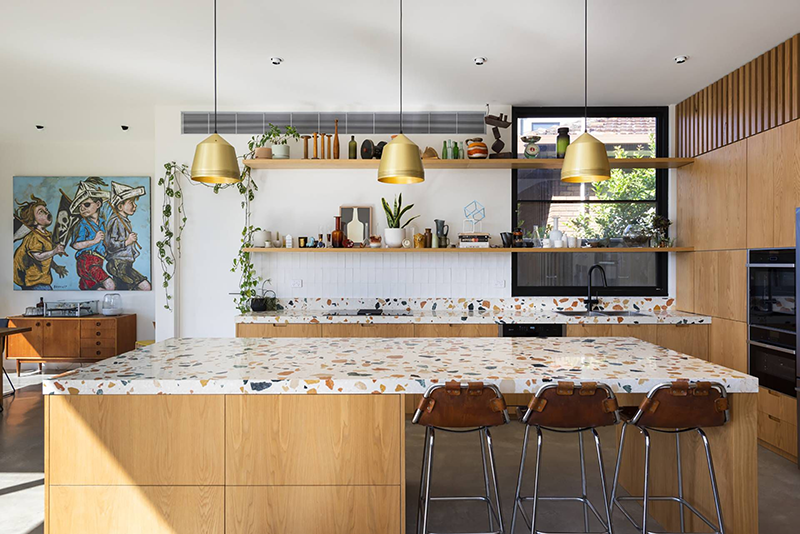
For example, large-chip terrazzo has become especially popular in modern kitchens and bathrooms, creating a bold visual statement while maintaining durability.
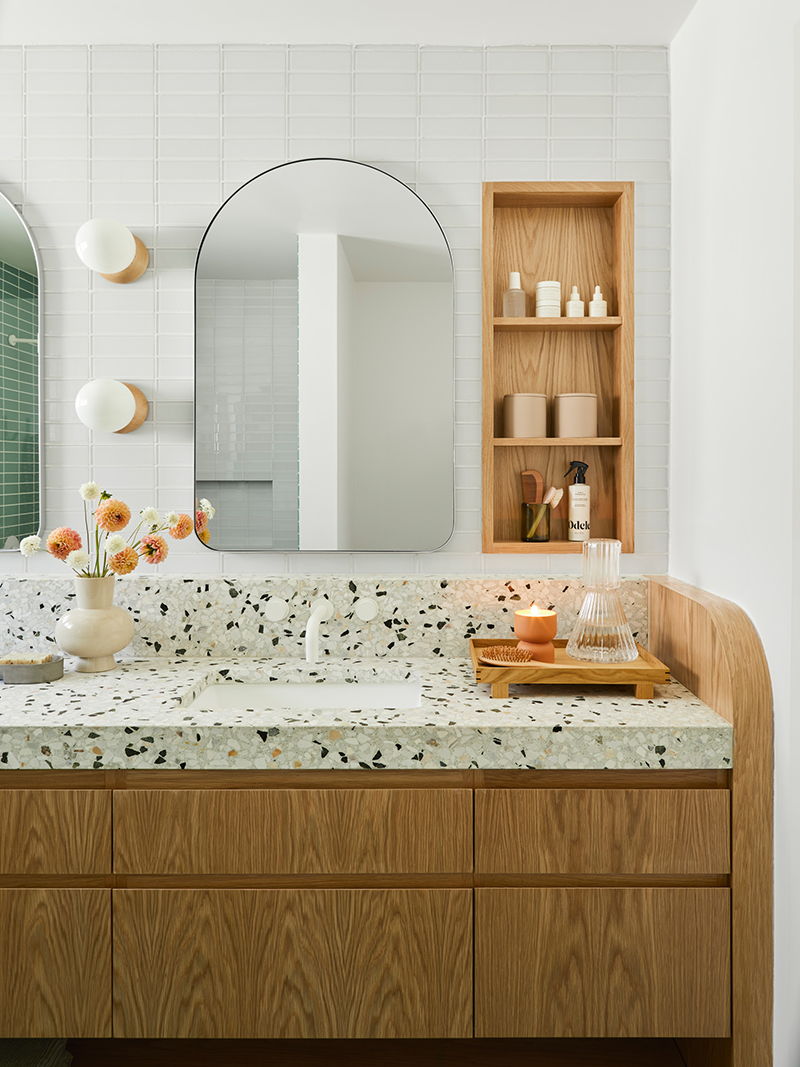
In the past, terrazzo was mostly seen in commercial buildings. Today, it is increasingly used in high-end residential design.
Common residential applications include:
Kitchen countertops
Bathroom vanities
Flooring
Feature walls
Furniture surfaces
With advances in fabrication technology, terrazzo slabs can now be produced with consistent quality and installed just like natural stone or quartz surfaces.
This has made terrazzo a design-forward material for modern homes.

 EN
EN