
 EN
EN
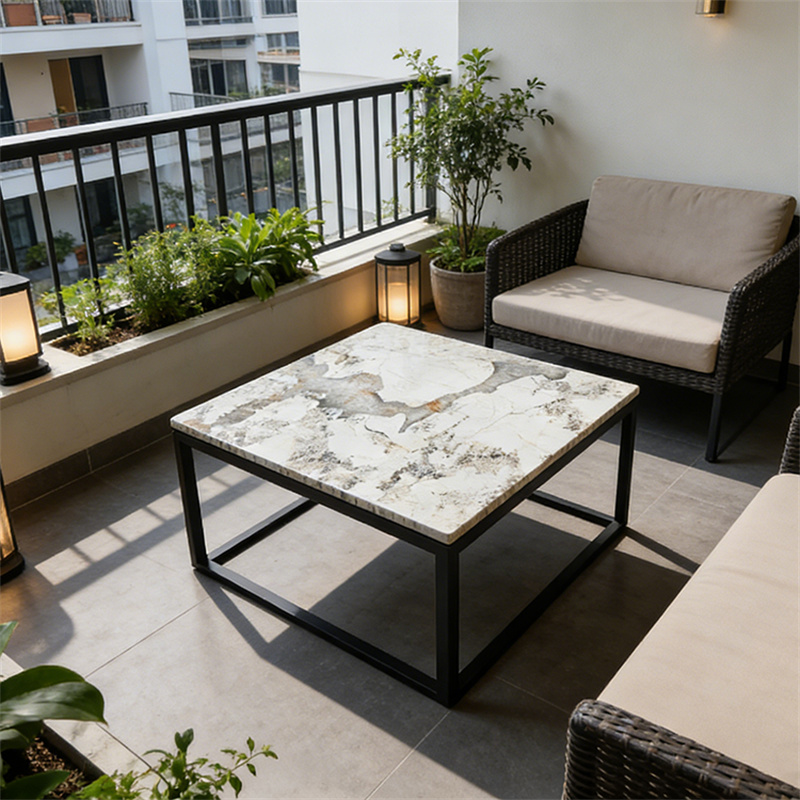
Although visual design is usually the starting point when choosing flooring for commercial or institutional installations, the success of the installation over the long term relies on a less visible but crucial element: the compatibility with building and environment. Flooring systems must work hand-in-hand with building structures, climate, and unique demands of each space. Terrazzo’s nature of having an extremely tight and non-porous component and the monolithic element it offers opens specific and critical opportunities and considerations. At Yuanda Stone we feel this aspect of compatibility is where installation truly begins. We consider it vital to understanding all components to help your terrazzo system attain ideal installation success, and here’s why.
Substrate Conditions and Preparation Requirements
Success begins long before the aggregates are batched and the dividers are placed. It begins with the substrate, the structural slab that the terrazzo is placed upon. The absolute basic structural compatibility required is that the substrate be structural, clean, and free of contaminants such as grease, oil, or curing compounds that would interfere with the adhesion. The substrate must also be adequately cured and dry in order for the terrazzo to function as a homogeneous system. Excessive amounts of moisture in the concrete can result in delamination of the terrazzo system or the formation of unsightly white deposits, also known as efflorescence. In addition, the substrate must have adequate tensile and shear strength to withstand the weight of the terrazzo system and to withstand dynamic traffic loads. At Yuanda Stone, we work with contractors to provide the necessary moisture testing and substrate profiling and the application of a bonding agent or scratch coat to mechanically or chemically bond the terrazzo system to the substrate.
Movement Joints and Stress Distribution
All buildings are inherently a living entity, expanding and contracting and adjusting to the forces of weather and load. Without provision for this expansion and contraction in a stiff floor system like terrazzo, cracks will eventually develop. That is why the careful installation of joints is so crucial to structural compatibility. We must account for control joints and expansion joints within the substrate, translating them through the entire terrazzo floor system. Without allowing for movement across these structural joints, simply tiling over them, the terrazzo will inevitably follow the weakest link and crack. The key to structural compatibility is the utilization of isolation joints that accommodate the movement on either side of the joint typically filled with an elastic material and terminated with metal or plastic strip. By detailing these joints to occur at specified distances apart and at junctions in the structural system, we dissipate stress, thus alleviating future cracking problems. The load-bearing capacity and thickness of the system will allow for the uniform distribution of loads over large areas thus avoiding point loads.
Bonded vs. Unbonded Systems
This comes down to the structural integrity of the building. Two systems are available: bonded and unbonded. The bonded systems are generally used on the ground floors. They form part of a single unit and are more structural, so can have thinner profiles. It really is a bonded monolithic monolithic structure. This method works exceptionally well as long as the original surface is sound, flat and completely dry. An unbonded system is used for more problematical structures where the existing concrete slab is more liable to flex and move, and may contain any moisture present in the sub-slab, so that the terrazzo is not part of any problematic substrate movement. The unbonded system comprises the use of a separate barrier placed under the terrazzo mix. It is more common to use an unbonded system on an above grade floor where there are greater structural movements.
Acoustic and Thermal Performance Integration
Building design today focuses on occupant satisfaction and sustainability—and floor systems are now evaluated for acoustic and thermal performance. As everyone thought the terrazzo is a solid surface and a very reflective material; this system also can integrate with structural system for thermal and acoustic regulation. To soundproof and reduce impact noise of a floor; a mat with a layer in the terrazzo system can be applied under the terrazzo, which absorb sound and make the room more comfortable like hotels and office rooms. For radiant heating, heat is conducted from tubes embedded in the terrazzo layer or in the substrate below. Due to the high density of terrazzo it acts as a thermal mass, and stores the heat and releasing it slowly, so it works perfect with thermal energy building methods. At Yuanda Stone; we also will assist customers on applying the most effective terrazzo thickness and also the right amount of aggregated needed for this integrated system.
Thus it all comes down to achieving balance and cohesion between flooring systems and the structure itself, to laying an absolutely reliable and durable terrazzo floor, be it based on a substrate treatment of the substrate, proper movement joint arrangements, use of the most suitable bonded systems, and innovative comfort properties in use.